
WholeClear PST to PDF Converter Case Study: Organizing a 30 GB Disarray of Government Project Folders into Structured PDFs
Summary: A government project documentation team faced the challenge of organizing 30GB of scattered Outlook PST files into structured PDF archives. Initially, they attempted a manual method using Outlook's print-to-PDF feature, which proved impractical for their 150,000 emails due to its time-consuming nature and potential for human error. They then adopted the WholeClear PST to PDF Converter, which allowed for a more efficient and scalable workflow, improving organization and reducing manual workload. The case study highlights the importance of choosing the right archiving method based on the scale of data, demonstrating the benefits of tool-based conversion for large archives while maintaining the importance of verifying converted records.
Overview
Government projects tend to produce years of documentation. Emails, approvals, meeting discussions, reports, invoices, attachments and official correspondence can still be stored in Outlook PST files long after a project is complete. When these files are scattered across various folders, it can be time-consuming to locate a specific record.
This case study follows a government project documentation team who ran into this exact problem. The team had approximately 30GB of Outlook PST data that included project emails and attachments. Their goal was simple: to organise the data into formatted PDF files that could be examined, disseminated and stored for later use.
The challenge was to convert a non-structured mailbox archive into a usable document collection, without losing important information contained in emails.
The Problem: 30GB of Project Data in Disarray
The documentation team collected PST files from a variety of project officers and administrative units. The files had been stored separately, and hadn’t adhered to any one naming or folder structure.
It was something like this:
30 GB total PST data
18 PSTs collected from various project teams
About 150,000 emails
Multiple folders of similar project correspondence
Email attachments saved in individual emails
Important records are spread across multiple PST archives
Different date ranges for multiple phases of the projects
No common archive for final documentation in PDF
The need was not just to turn emails into PDFs right now. The team needed a tidy archive where project correspondence could be found without repeatedly opening Outlook and searching through large PST files.
Manual Method
Initially, the team explored the option of using Outlook and Microsoft Print to PDF. This seemed the simplest approach as no additional conversion application would be needed.
Steps
Open the PST file in Microsoft Outlook.
Choose a mailbox folder you need.
Open every email.
Select the option Print.
Choose a PDF printer.
Save the email to PDF.
Save the resulting PDF with a meaningful name convention.
Do the same for other emails and folders.
Separate folders for different projects or departments.
Examine the PDFs you receive to check for missing or improperly saved records.
Perhaps this will be reliable for a small mailbox. But the government project team was dealing with some 150,000 emails.
Benefits of the Manual Approach
The manual approach had some advantages:
No special conversion software was necessary in the first place.
Users could pick individual emails to convert.
Staff using Outlook were already aware of the process.
Users could preview an email before saving it.
Drawbacks of the Manual Method
The team tried the process and the drawbacks reared their ugly heads.
Very time consuming: Creating one email at a time was a lot of work.
Lack of scalability: A process that worked for dozens of emails was not workable for some 150,000 messages.
Human errors: Staff can forget to check their emails, save files under different names, or put PDFs in the wrong folders.
Dealing with attachments: Attachments required special handling and could complicate the archiving process even further.
Outlook Dependency: The workflow was highly dependent upon the availability and proper working of Outlook.
After processing a small sample manually, the team estimated that it would take several weeks of staff time to complete the entire archive.
Using PST to PDF Converter
So, the team assessed a special PST to PDF conversion workflow. The goal was to reduce repetitive manual work, but keep important information from emails and the current organization of mailboxes.
For this phase they used WholeClear PST to PDF Converter as a tool based solution.
Step-by-Step Process
The team used a well-structured workflow:
Launch the Software: Download, install, and open the PST to PDF Converter on your Windows system.
Select Email Source: Choose Personal Storage File (.pst) as your source format and click Next.
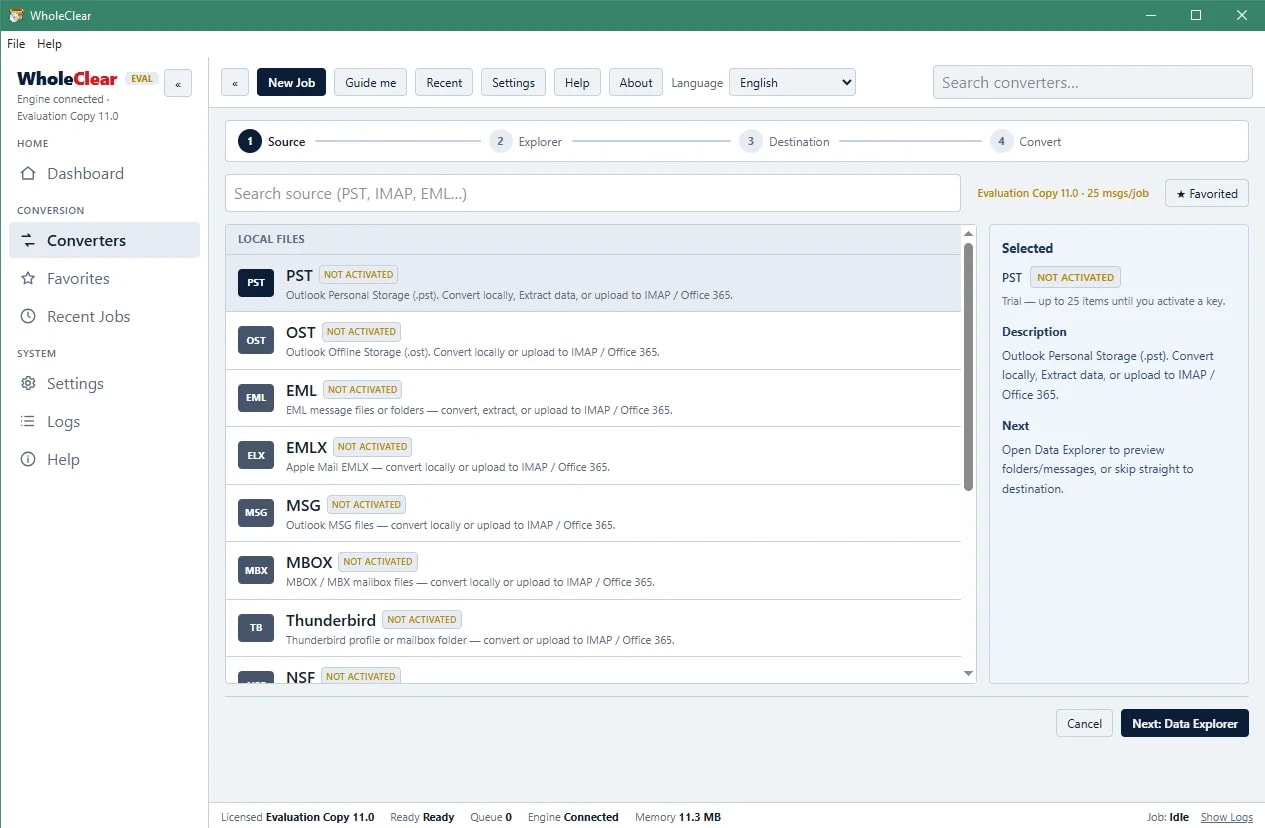
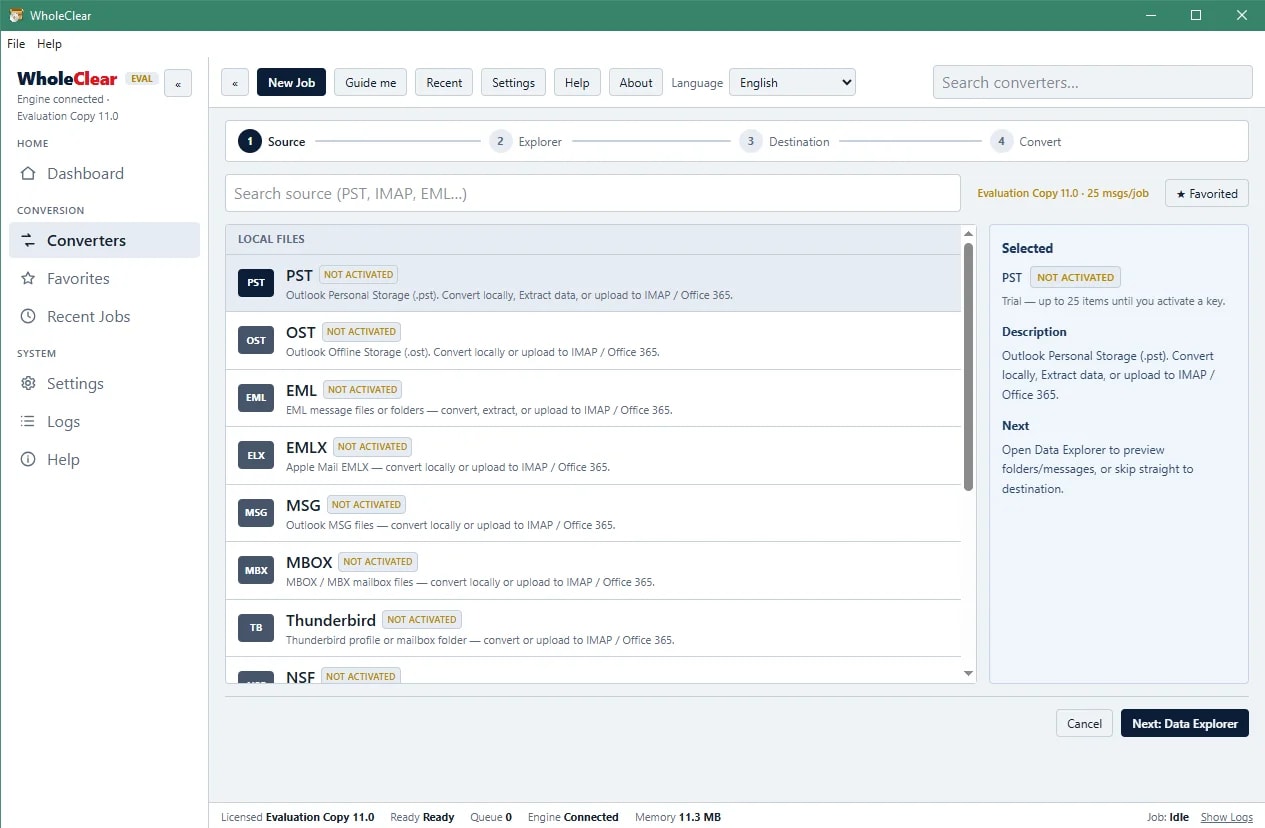
Add PST Files: Use the Browse files... or Browse folder... options to load your Outlook PST files into the application, then proceed to the Data Explorer.
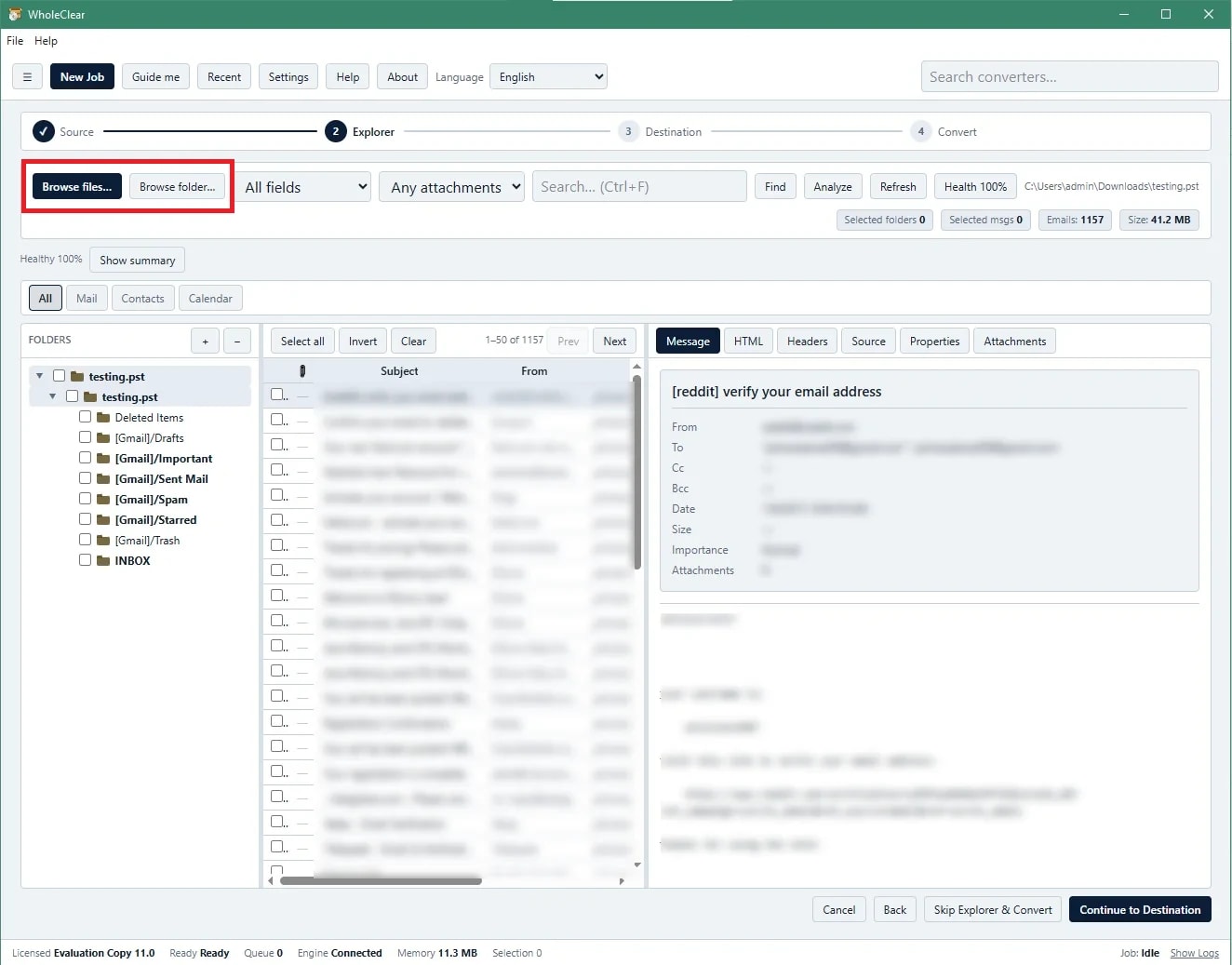
Preview and Select Folders: Inspect the scanned mailbox items in the preview pane, and select the specific project folders or emails you want to convert.
Choose Output Format: Select Convert to PDF file format (.pdf) as your target option.
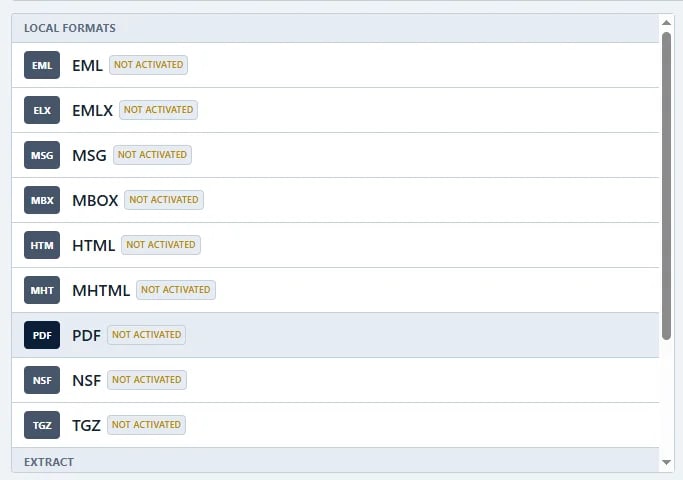
Set Destination Path: Click the Browse button (or output folder option) to choose where you want to save the resulting PDF files and exported attachments.
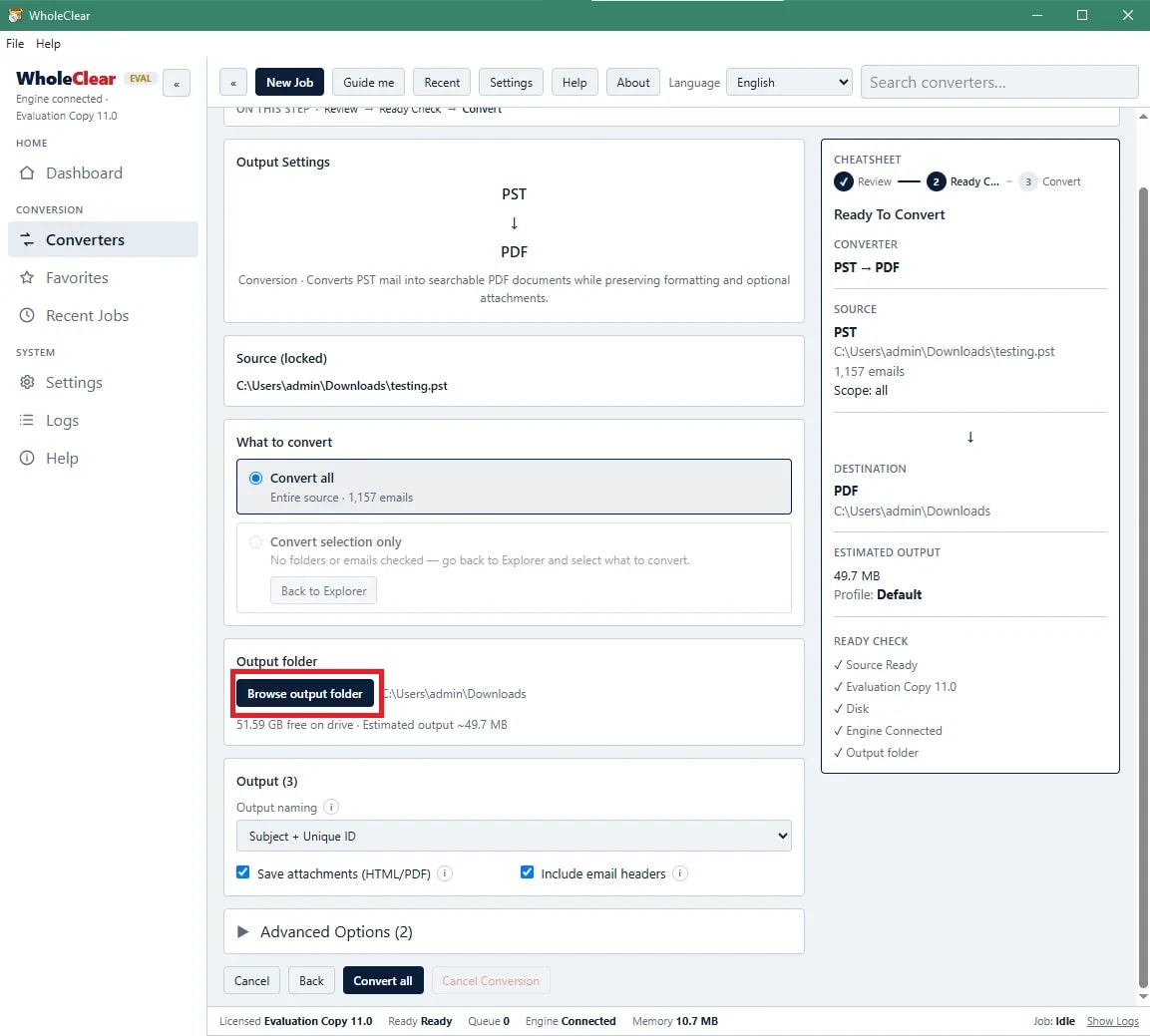
Save Attachments & Convert: Choose the option to save attachments, and then click Convert selected (or the final execution button) to run the conversion process.
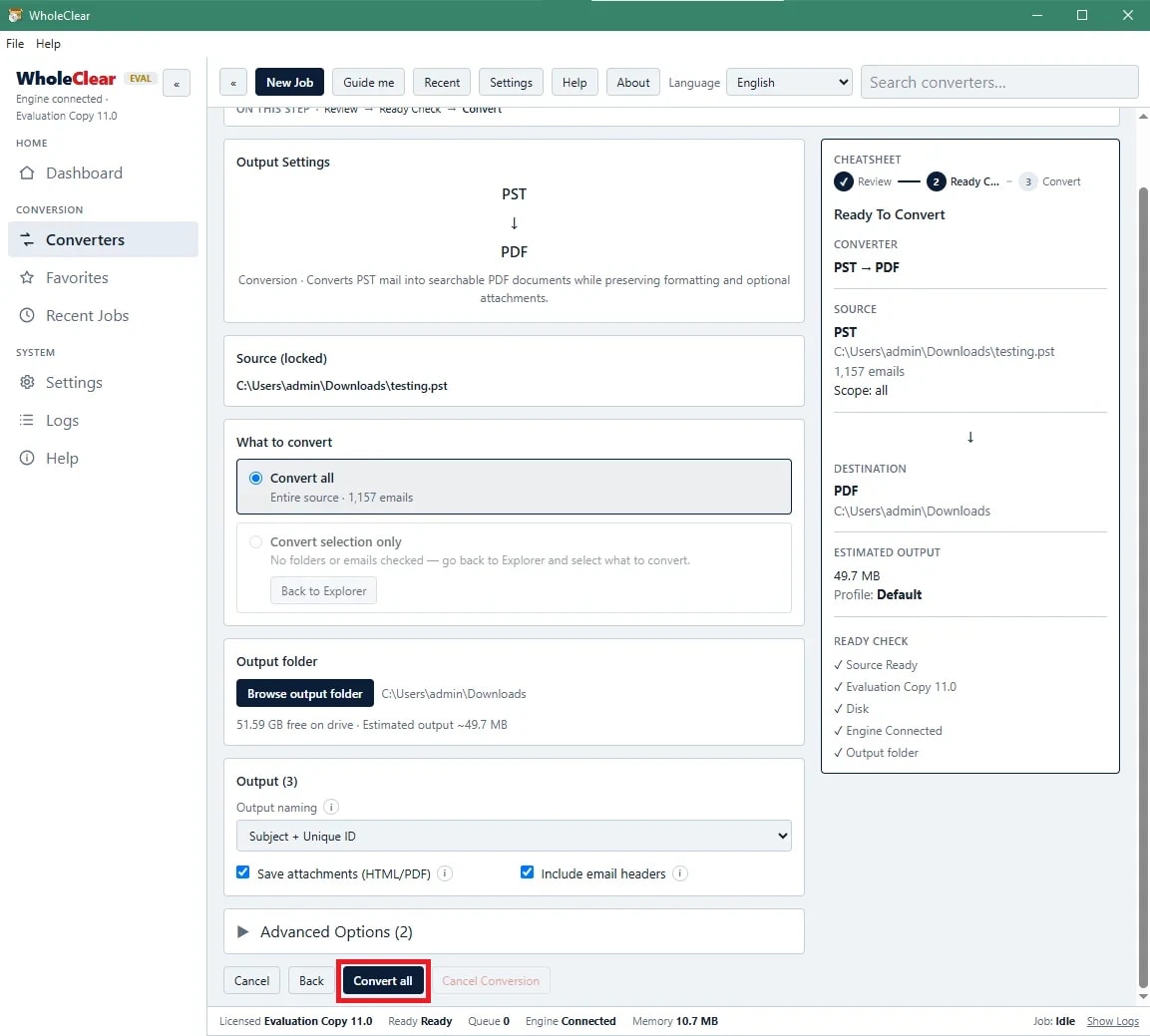
The team was able to process greater volumes of mailbox data via a dedicated conversion workflow rather than opening and printing individual emails.
Benefits of the Tool-Driven Approach
The biggest benefit was less repetitive work. The team could process mailbox data through a centralised conversion process instead of printing out thousands of emails.
Other advantages are:
Quicker processing of large PST collections
Reduced redundancy in human interventions
Better organization of converted email messages
More appropriate for large archives
Less chance of accidentally skipping individual emails
Improved handling of multiple PST files
Easier to review and document post conversion
The team established a standard naming and folder structure for the resulting PDF archive. This helped staff to easily locate correspondence related to particular phases of the project.
Disadvantages of the Tool-Based Approach
The specialised conversion tool was not without its downsides.
Software evaluation is required: Before processing the complete archive, organisations should test the application with representative PST files.
Large datasets: Do not treat a 30 GB archive as one large uncontrolled conversion job but process systematically;
The need to verify output still matters: Automated conversion does not negate the need to verify important records, attachments, formatting and folder organization.
Why the Tool-Based Approach Did the Best Job
For this particular project the tool-based workflow was more practical due to the size of the archive.
The manual method required staff to perform repetitive actions for individual emails. With around 150,000 messages, even a short time to process an email would require a great deal of labour.
The workflow eliminated individual email printing in favour of a structured mailbox conversion.
The team still did quality checks, but they focused on representative folders and important project records, instead of manually creating every PDF one by one.
Therefore, the conversion project was easier to carry out and staff could spend more time reviewing the actual documentation rather than doing repetitive export work.
Who is this method for?
A PST to PDF workflow could be especially useful for:
Government departments managing project archive
Compliance and legal teams
Email records held by financial organisations
Consultant’s client correspondence
Archiving of mailboxes by IT teams
Organisations that are creating records for long-term preservation
Businesses requiring searchable or shareable PDF documentation
This is particularly useful if you have a PST collection that is too large to process effectively by printing each email.
FAQs
1. Why convert government project emails into PDF?
PDF is a handy document format for reviewing, sharing and preserving email records outside the original Outlook mailbox environment.
2. Can manual PST to PDF conversion be performed for large archives?
It may be okay for a small handful of emails but converting thousands of messages manually can be very time consuming and prone to human error.
3. How large was the archive in this case study?
The project consisted of approximately 30 GB of PST data with 150,000 mails spread across 18 PST files.
4. Will the complete PST archive be converted all at once?
Not necessarily. When processing large archives, it is generally easier to work with logical groups based on project, department, date, mailbox, etc.
5. Should I check the converted PDFs afterward?
Yes. After conversion, check and review important government records to ensure content, folder organization, formatting, and attachments are correct.
6. Is this method good for long term email archiving?
Yes. You can convert selected mailbox records to PDF for distribution, review, and retention as part of a document archive.
7. Is a dedicated converter always better than the print option in Outlook?
Not in every situation. For a few emails, printing from Outlook will be sufficient. If the number of messages and PST files is large enough, a dedicated conversion workflow is more feasible.
Conclusion
The 30 GB government project archive was initially a chaotic collection of PST files spread across different teams. At first it seemed like a good idea to do it manually. But then the team realised they had about 150,000 emails to go through and that wasn't going to work.
The important lesson was not just that automated conversion is faster. That the correct archiving method must be appropriate to the scale of the data.
It might make perfect sense to print out PDFs by hand for a few emails. For a large project archive, a structured workflow from PST to PDF can reduce repetitive work, improve consistency and make the resulting documentation easier to manage.
The team found a more manageable way of going from a 30 GB mailbox archive to a structured project record based on PDFs by moving from just printing out individual emails to a dedicated conversion process.

.png?_a=BAVMn6E80)